
Mike T. Verified customer
★★★★★
Noticeable improvement in my sperm health markers after a few weeks. Happy with it.
It isn't "just age." Most of what shrinks your load after 40 comes down to things you can change. Here's how to shoot further and get bigger loads again, and why it takes exactly one 74-day cycle to find out.
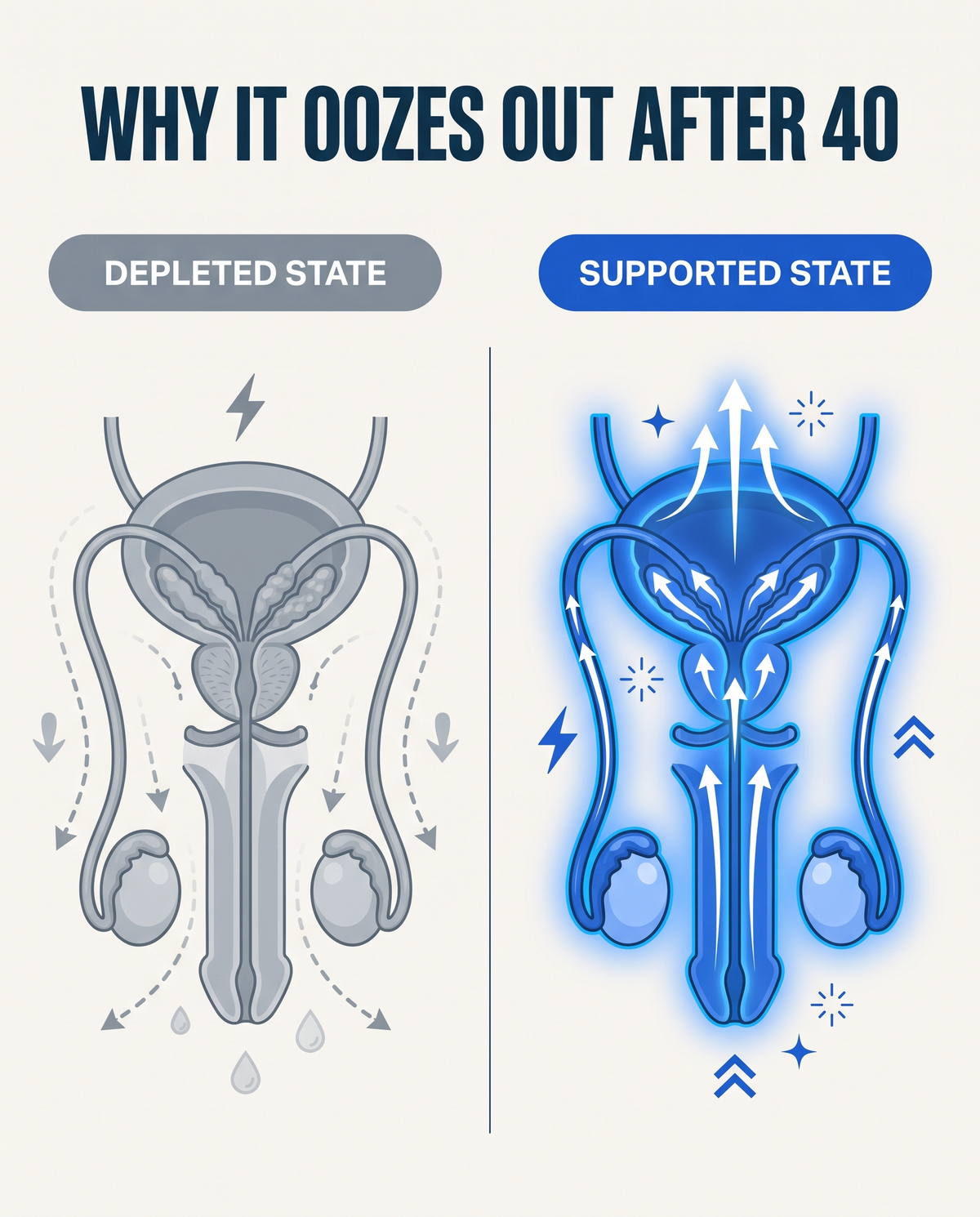
At 22 you never thought about it. It just happened, and it went places.
Now you're in your 40s. Nothing's "wrong." You still want it. You still finish. But somewhere along the way the rope turned into a dribble. There's less of it and nothing behind it. It just… oozes out.
You haven't told your wife. You definitely haven't told your doctor. And you've never once seen anyone talk about it.
So let's talk about it. Here are the 7 reasons it happens, and the part most men never hear: almost every one of them is something you can work on.
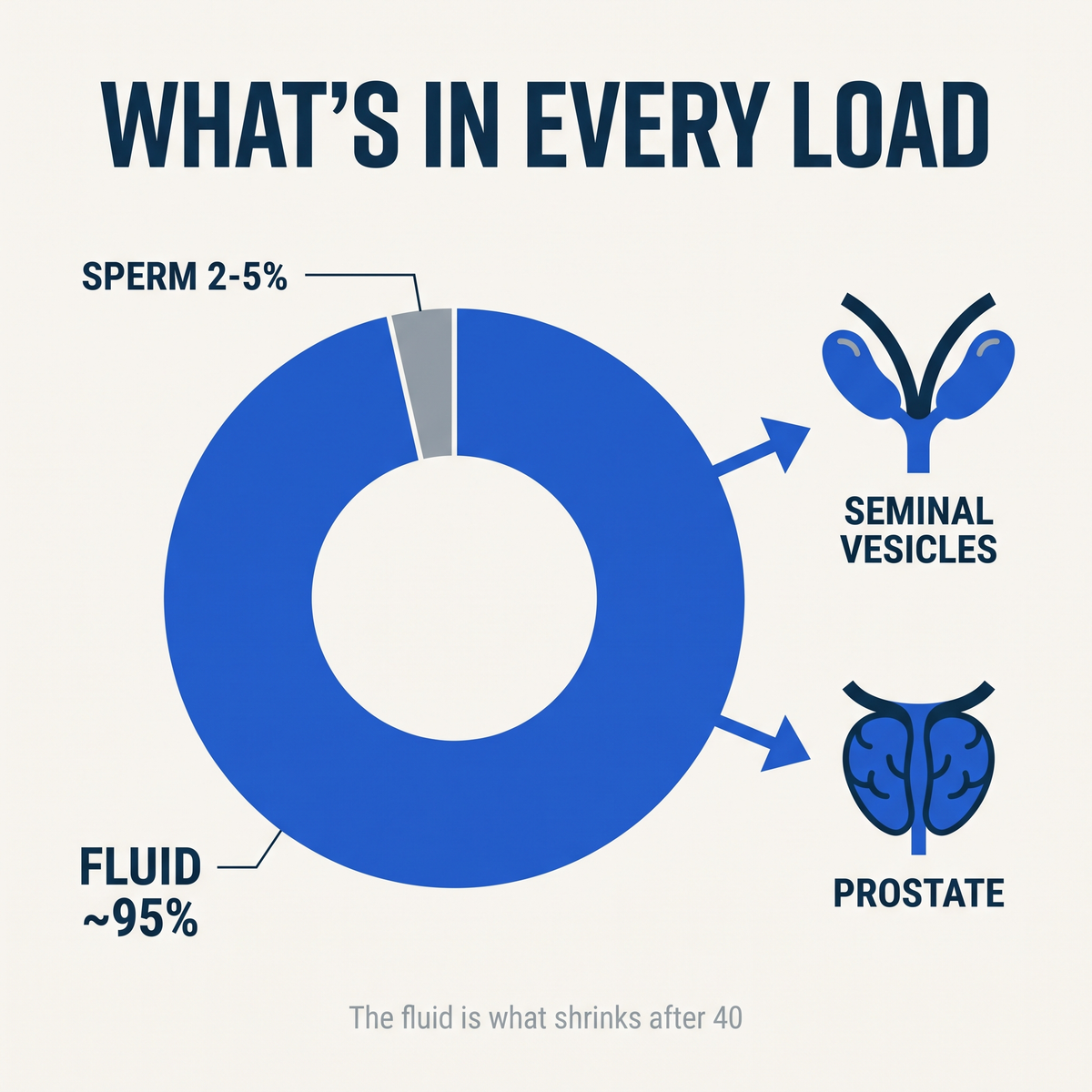
Here's what nobody tells you: sperm is only a tiny fraction of what comes out, roughly 2–5%. The rest is fluid built by your seminal vesicles and prostate, every single day, from whatever raw materials you give them.
When those glands are underfed and your hormones dip, they make less. Less fluid means a smaller load, and a smaller load has less to push.
That's actually good news. You're not trying to grow something new. You're trying to get a factory you already own back on a full shift.
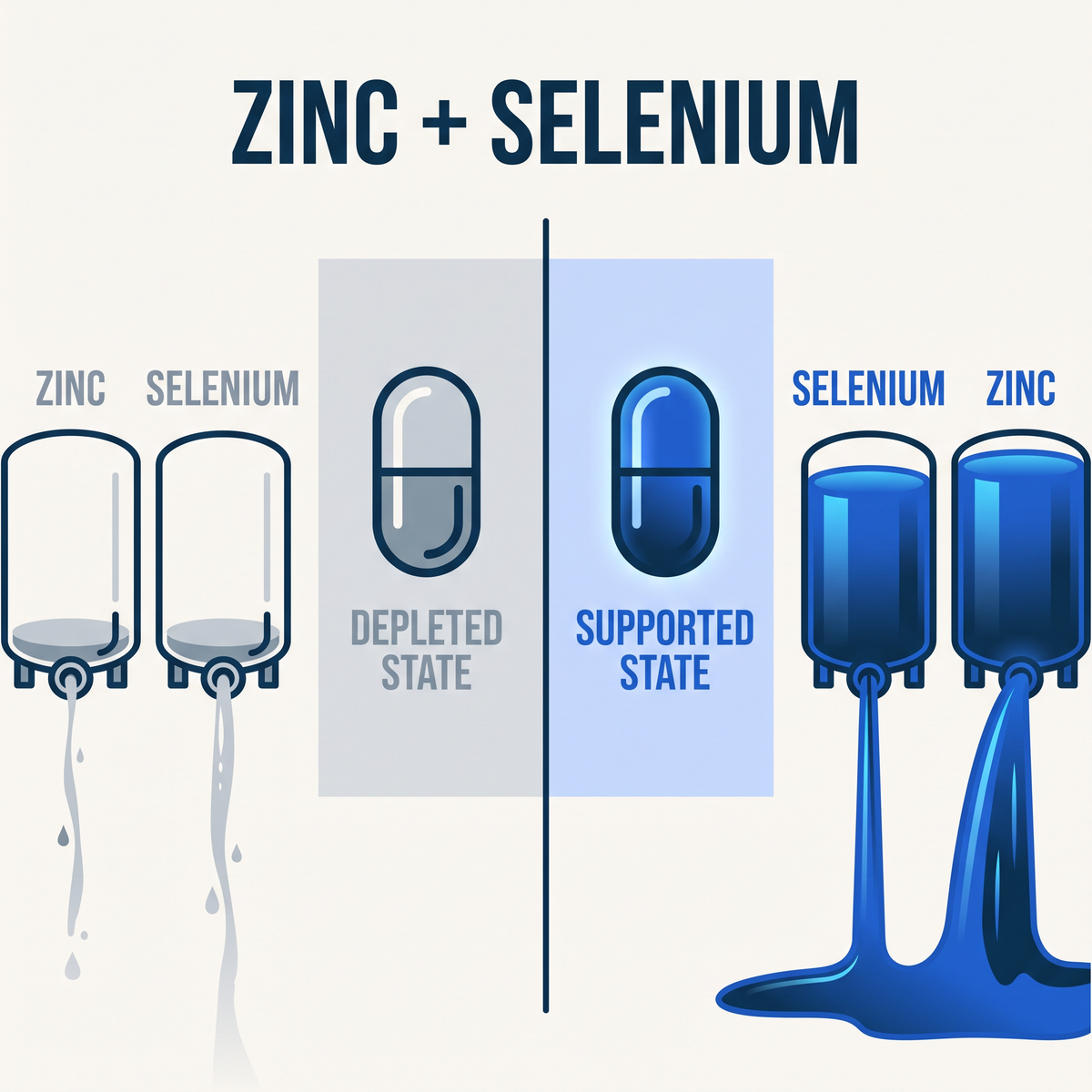
Semen is one of the most zinc-dense fluids in your body. Every time you finish, some of that zinc leaves with it, and it has to be replaced from food.
Most men over 40 eat less of it than they think, especially if they've cut back on red meat and shellfish. Zinc contributes to normal testosterone levels and normal fertility and reproduction. Its partner mineral, selenium, contributes to normal sperm production.
If the factory is short on its two main raw materials, it doesn't shut down. It just quietly makes less.
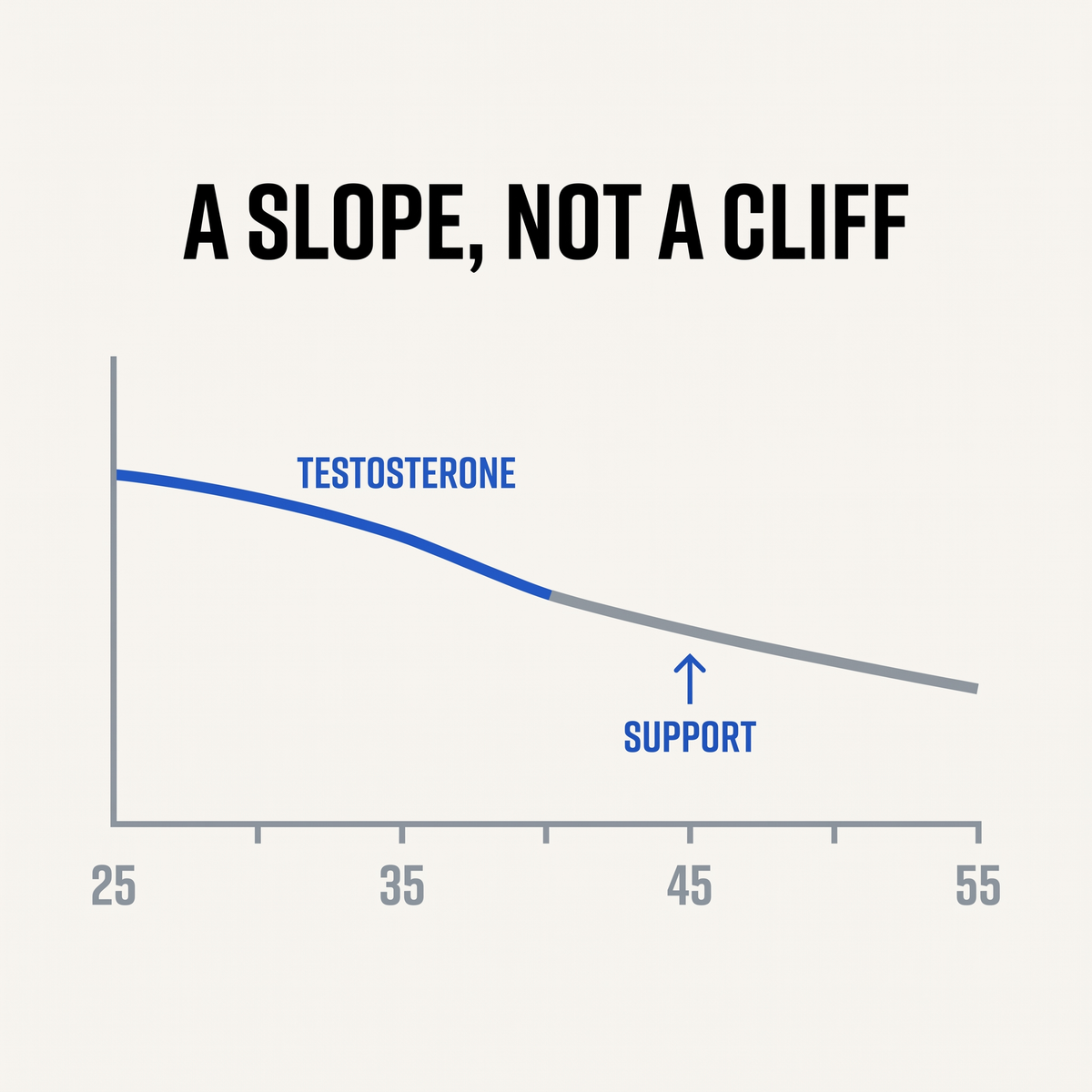
It's not a cliff. It's a slope. Year after year, a little less. Your drive might feel almost the same, but testosterone is also the signal that tells those glands to keep producing.
Research tracking men across ages has found semen volume tends to decline gradually with age, which is exactly the "it's smaller than it used to be" you've noticed.
A slope can be pushed back on. You just have to stop treating it like it's fixed.
90 days to decide · money-back guarantee
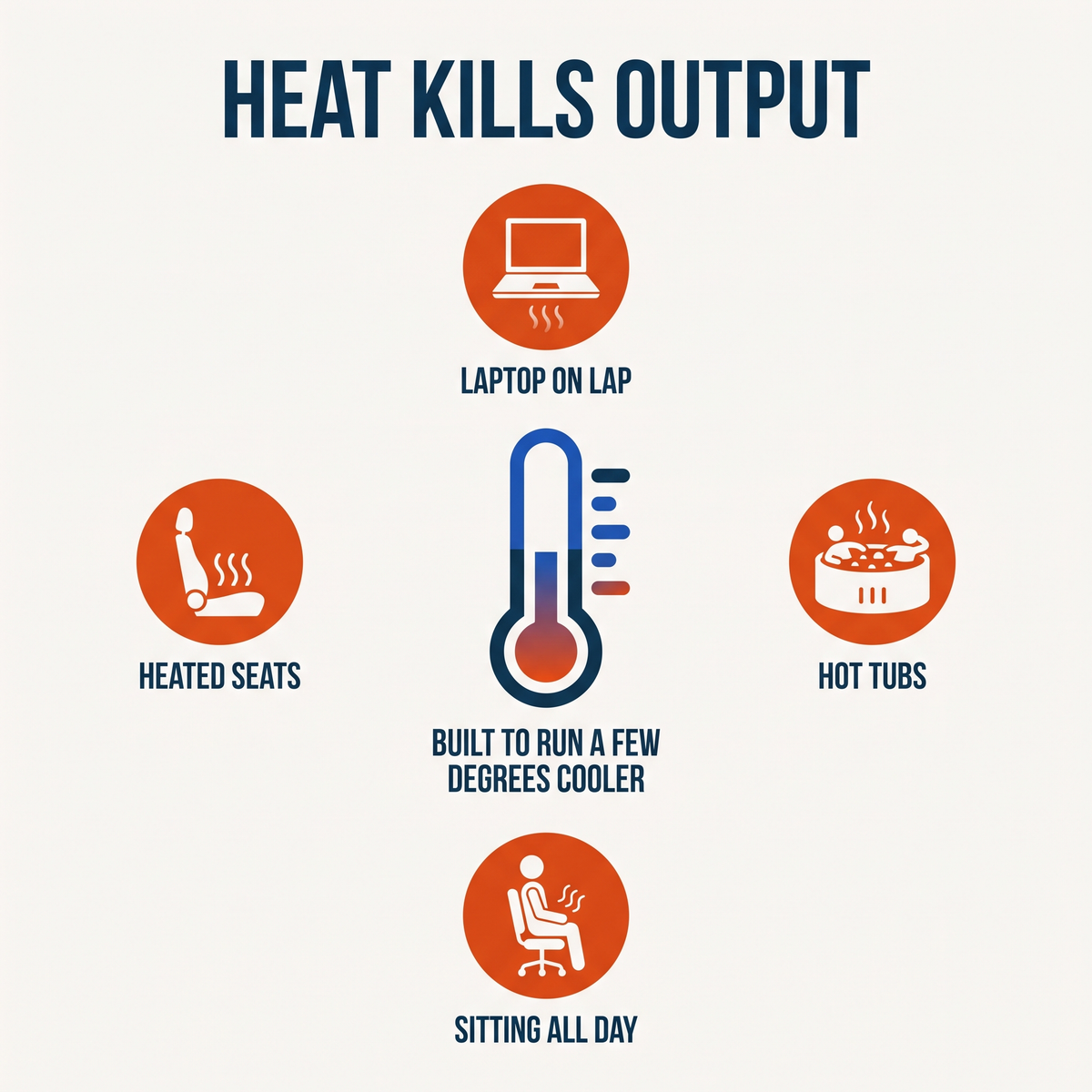
Your testicles hang outside your body for a reason: they work best a few degrees cooler than the rest of you.
Now think about your day. You sit for 8–10 hours. The heated car seat is on. The laptop is on your lap. Then there's the hot shower or the hot tub. You're warming the production line all day long, and output drops.
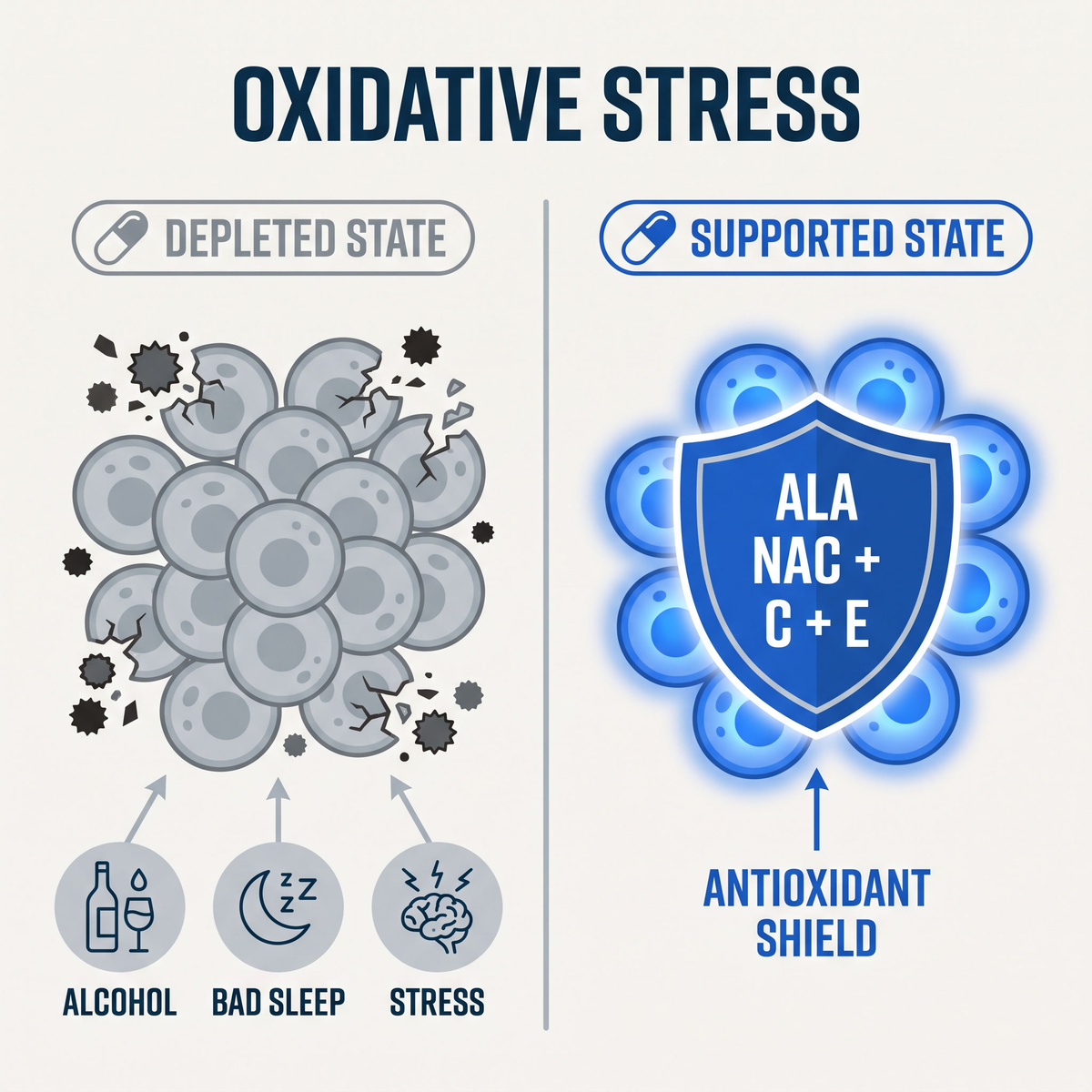
A couple of drinks most nights. Five or six hours of sleep. A job that never really switches off. Each one creates oxidative stress: unstable molecules that wear down cells, including the ones building your next load.
Your body fights back with antioxidants, but after 40 it needs more help. Vitamins C and E, zinc and selenium contribute to protecting cells from oxidative stress. Alpha lipoic acid and NAC are two of the most studied antioxidants in men's reproductive health.
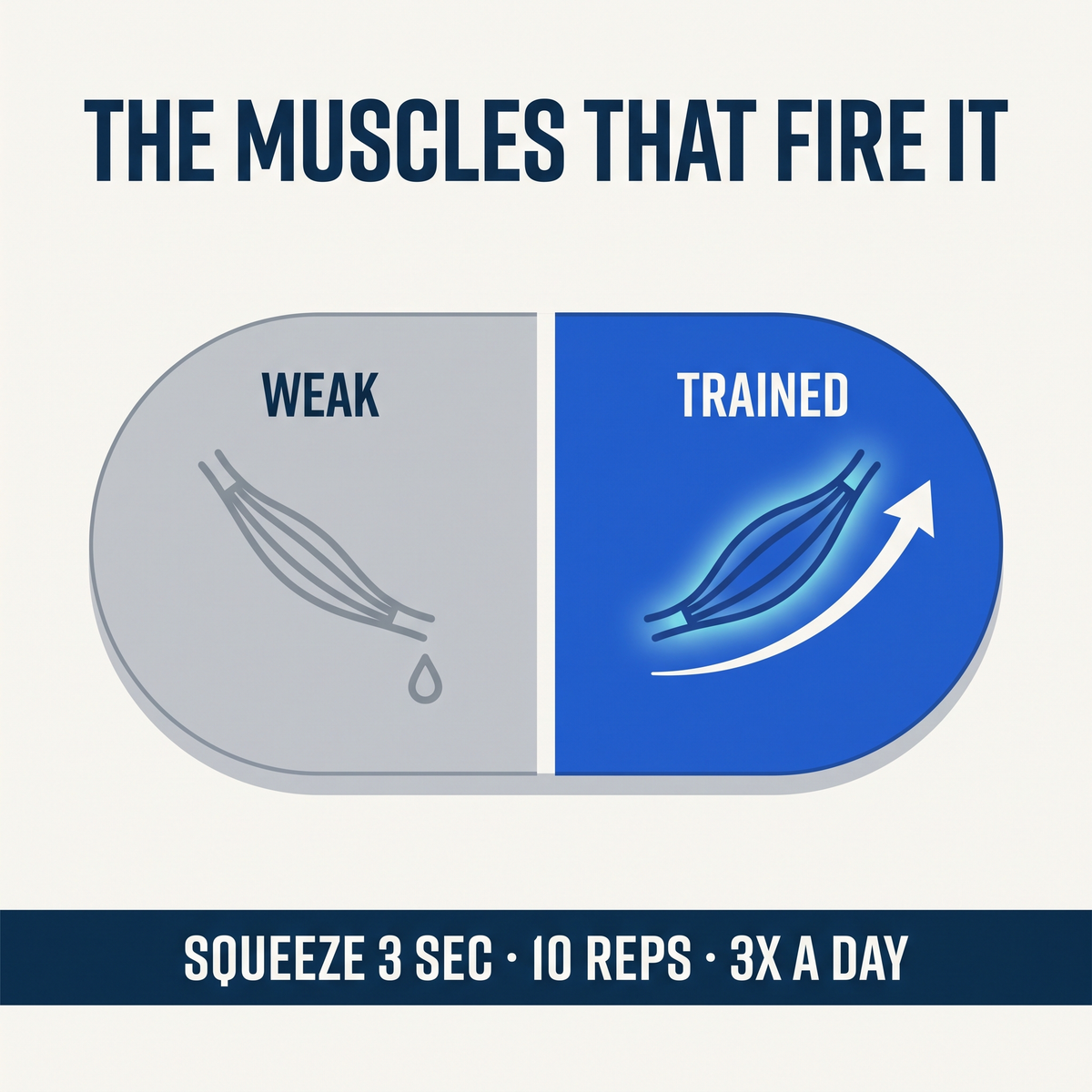
How far it goes isn't luck. The shot comes from rhythmic contractions of your pelvic floor muscles, the same ones you'd use to stop peeing mid-stream.
Years of sitting weaken them. Weaker contractions plus less fluid means there's nothing to launch and nothing to launch it with. That's the dribble.
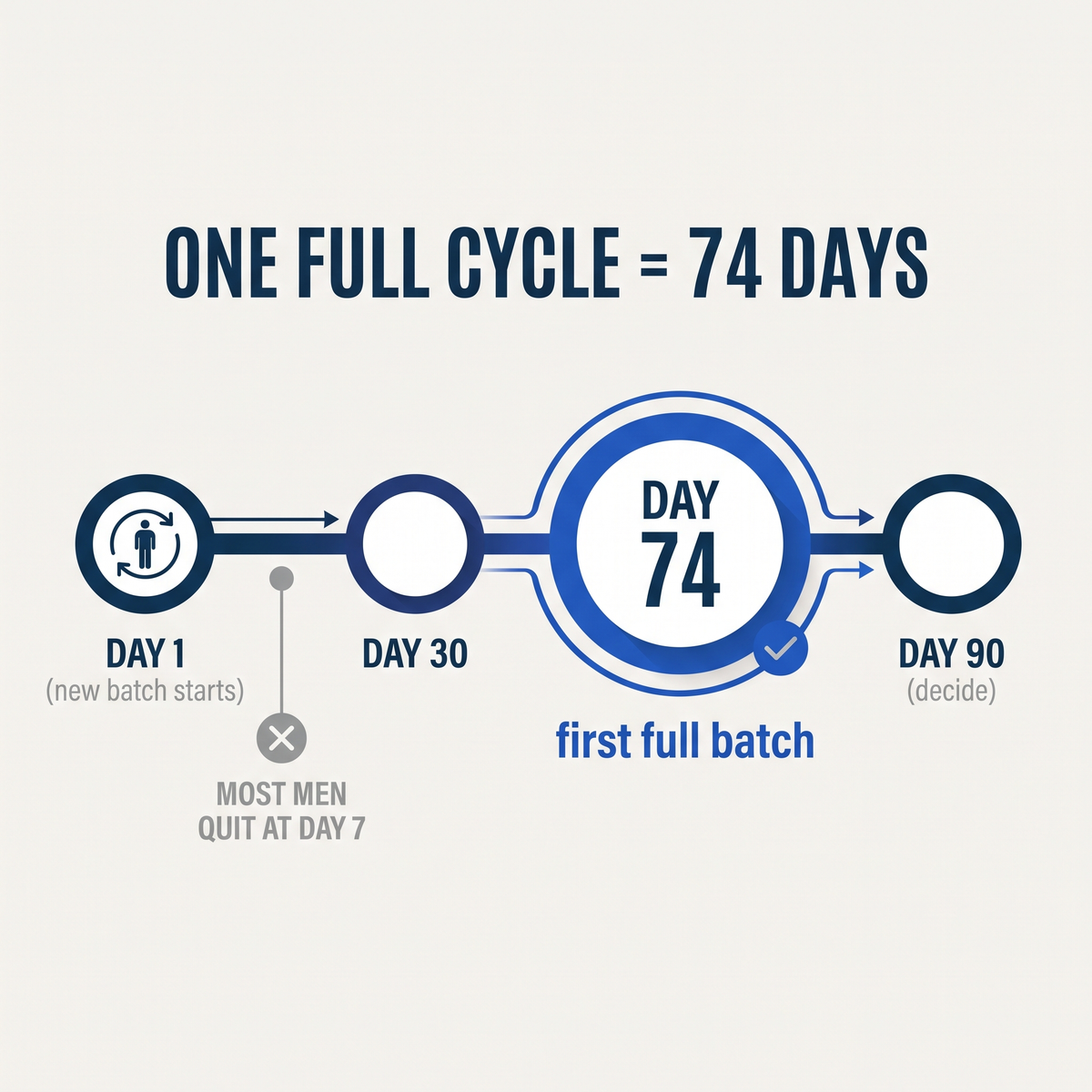
This is the one that catches almost every man. Your body builds a completely new batch roughly every 74 days. Whatever you're doing today is building the load you'll have about two and a half months from now.
So most guys try something for a week, see nothing, and quit, right before it would have mattered.
The real test isn't 7 days. It's one full cycle.
Step 1 and the Kegels cost nothing. Step 2 is where most men fall down: getting all of it from food every single day, for 74 days straight, is near impossible. So we put it in two capsules.
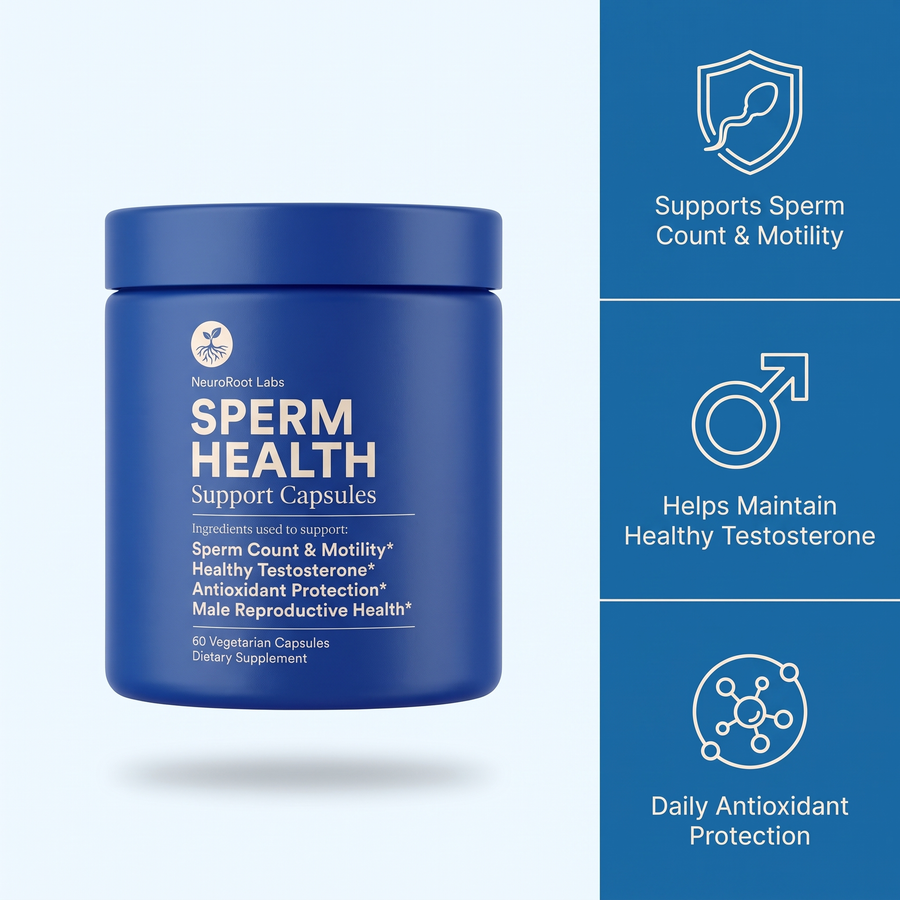
No powders to mix, no pillbox of 6 separate bottles. Two capsules with breakfast.
3 bottles covers the full 74-day cycle with room to spare.
Also available as 1 bottle ($39) or 6 bottles ($174)
No. It's not a pill for the moment. It's daily nutrition that supports your body across a full production cycle.
Give it one full cycle, about 74 days. That's why we give you 90 days to decide.
You're covered by our 90-day money-back guarantee.
90 days to decide · money-back guarantee
This is advertising content from NeuroRoot Labs. These statements have not been evaluated by the Food and Drug Administration. This product is not intended to diagnose, treat, cure, or prevent any disease. Individual results vary. Consult your doctor before starting any supplement, especially if you take medication or have a medical condition.
Sources: Kidd SA et al. Effects of male age on semen quality and fertility: a review of the literature. Fertil Steril 2001. Neto FTL et al. Spermatogenesis in humans and its affecting factors. Semin Cell Dev Biol 2016.